 Get Custom Matches
The first real decision when you order custom matches is not the artwork. It is the format. A matchbook, a slide-out matchbox, and a long cigar match are three different products that happen to share a striking surface, and the one you pick sets your stick count, your burn time, your printable area, your minimum order, and your per-unit cost before a single color is chosen. Getting the format right first makes every later choice easier.
The three formats, and what actually separates them
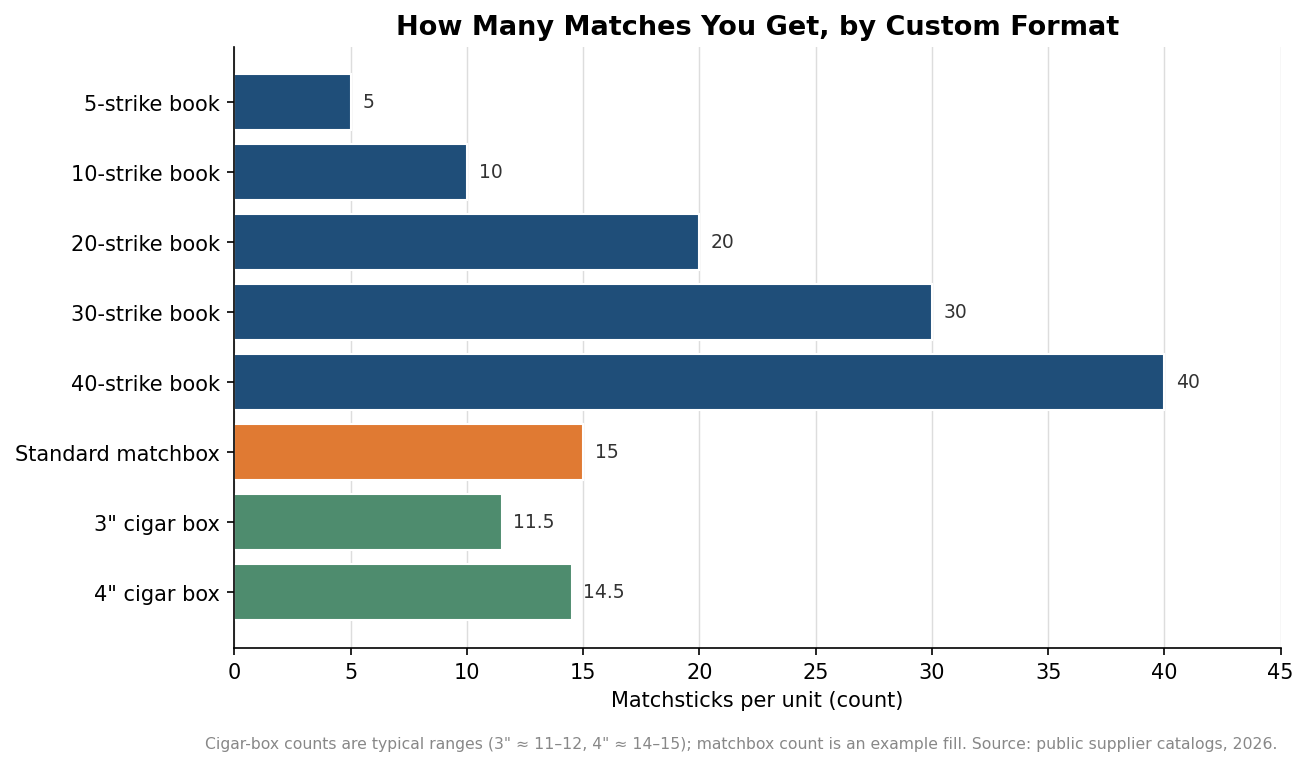
A matchbook is the flat, foldable cover with a comb of paper matches stapled inside and a striker on the back or front flap. It is the classic bar-and-restaurant giveaway: slim enough to sit in a bowl by the register, cheap in volume, and printable across the front, back, and inside cover. Paper matchbooks come in fixed strike counts, most commonly 20 and 30 sticks, with 5, 10, and 40 also available.
A matchbox is a two-piece slide box, a printed sleeve around a tray of wooden matches with striker strips on one or both sides. Boxes read as more premium than books because the print wraps a rigid three-dimensional object, and they hold wooden sticks rather than paper combs. A typical rectangular promotional box measures around 56 by 27 by 10 millimeters and holds roughly 15 wooden sticks, though square and cube boxes are common for retail and wedding favors.
A cigar or long match is a wooden stick well beyond standard length, sold in a tall box. Three-inch sticks run about 11 to 12 to a box and four-inch sticks about 14 to 15, while hearth and fireplace matches stretch to eight, ten, or eleven inches for reaching down into a candle jar or a firebox. The extra length is the point: a longer wooden stick burns slower and keeps the flame away from your fingers.
Strike count and burn time drive the format
Match up the format to how the match will be used, not to how it looks in a mockup. A standard paper book match burns for only about 20 to 30 seconds, which is plenty for lighting a birthday candle or a cigarette but marginal for a stubborn cigar or a deep-set candle. A four-inch wooden cigar match can stay lit closer to a minute and produces a cleaner, more even flame, which is why cigar lounges and high-end candle brands specify wooden sticks over paper combs. These burn times are indicative and vary with wood, tip formulation, and humidity, but the ranking holds: longer wooden sticks buy you more lit time.
Stick count matters for a different reason. A 30-strike book gives a guest more uses per unit, so it lingers and gets seen more often, which is what you want for a brand impression. A 20-strike book is cheaper and lighter for large-volume handouts. A box of 15 wooden matches or a dozen cigar sticks is a keepsake more than a workhorse, so it fits favors and retail shelves rather than bulk counter giveaways.
What each format costs, and the minimums behind the price
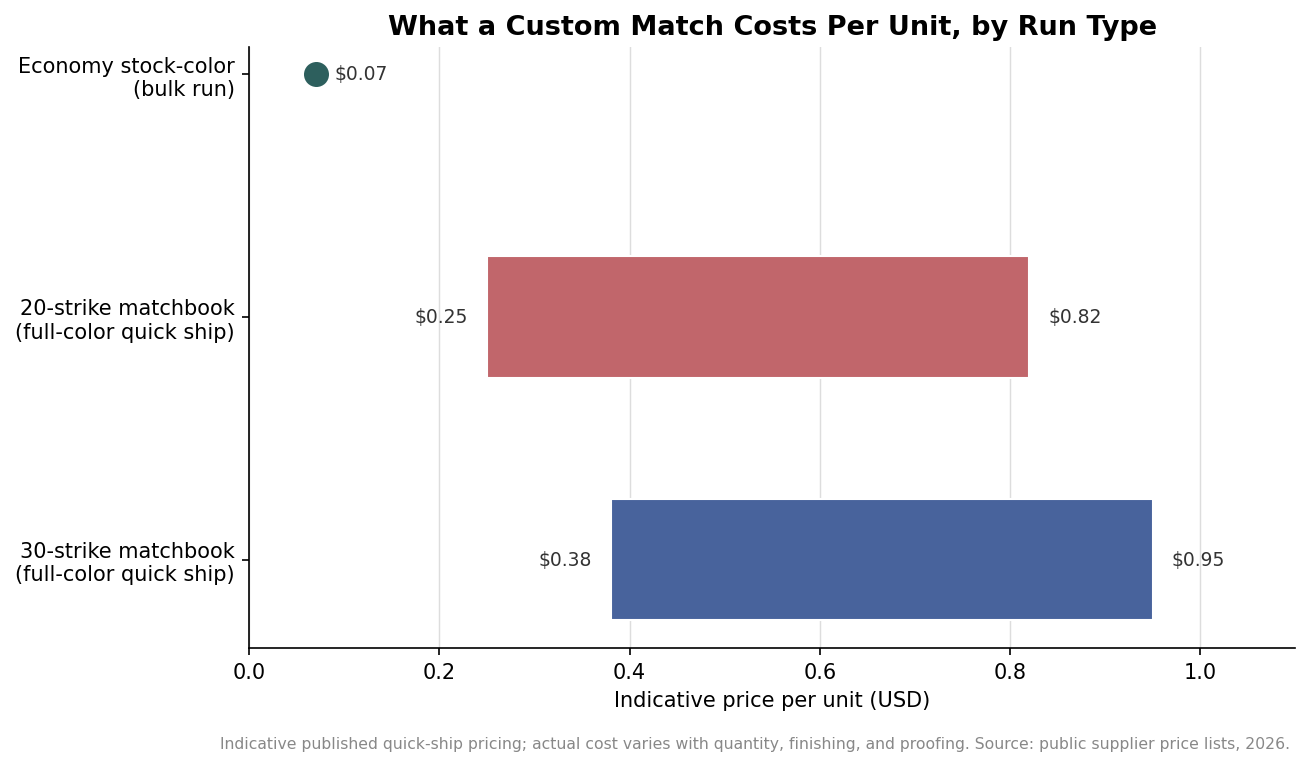
Format also decides your entry point. Full-color quick-ship matchbooks often start around a 200-unit minimum, foil-stamped and specialty lines commonly begin near 1,000 units, and the cheapest economy stock-color runs usually require 2,000 to 5,000 units before the low headline price applies. In other words, the lowest per-unit cost lives behind the highest minimum.
On a per-unit basis, economy stock-color matches in bulk can land near seven cents each, while full-color quick-ship books tend to run roughly 25 to 82 cents for a 20-strike and about 38 to 95 cents for a 30-strike, depending on quantity and finishing. Wooden boxes and long cigar matches sit higher again because the stick and the rigid box cost more to make. Treat these as indicative published figures rather than a quote; real pricing moves with quantity, ink coverage, and any foil or specialty coating.
Printing and finishing are not equal across formats
The formats do not offer the same canvas. Matchbooks give you the most printable real estate for the money, including full-bleed covers, inside-cover printing, and one-to-four color spot or full-color digital work, plus options like foil hot stamping, UV gloss, colored match tips in a range of stock colors, and even printed matchsticks. Slide boxes print beautifully on the sleeve but are constrained by the box footprint, so fine detail needs to be sized for a small rigid panel. Long cigar boxes offer a tall, narrow print field that suits a vertical logo lockup more than a wide wordmark. Decide the artwork’s shape after you have chosen the format, not before.
Choosing without second-guessing
Work backward from the moment of use. If the match is a high-volume counter giveaway meant to travel and get seen, a printed matchbook in a 20 or 30 strike is the efficient answer. If the match is a favor, a shelf product, or a premium table accent, a wooden slide box earns its higher cost through the way print wraps a solid object. If someone will actually light a cigar, a deep candle, or a fireplace with it, specify a three-inch, four-inch, or hearth-length wooden stick and accept the higher unit price for the longer, steadier burn. Settle the format first and the sizing, count, and finishing questions mostly answer themselves.
One planning note on timelines: standard custom match production commonly runs about four to six weeks after proof approval, while quick-ship programs can turn full-color books in under 12 business days and some stock formats ship in as little as 5 to 10 days. If a launch or an event has a hard date, let the lead time, not just the look, help pick the format.
Leave a Reply