 Get Custom Matches
Custom matches look like the easiest print job in the world: a little box, a logo, a striker, done. Then the order arrives and the matches are too short to light the restaurant’s tabletop candles, or the logo has vanished into a dark stripe, or the reprint pushes the launch two weeks. Most of what goes wrong with a match order is decided before anyone approves the artwork, in choices that feel too small to matter. Here are the mistakes that show up most often, and how to steer around each one.
Matching the match to the wrong job
Stick length is the single most common misfire, because the word “matches” covers products that range from about two inches to four and a half. A standard matchbook or cocktail matchbox runs roughly two to two and a quarter inches, which is right for lighting a cigarette, a birthday candle, or an incense stick. Ask that same short match to reach into a hurricane candle, a fireplace, or a grill and your guests are burning their fingers. Long fireplace and cigar matches exist precisely for that reach, running up to four inches and beyond.
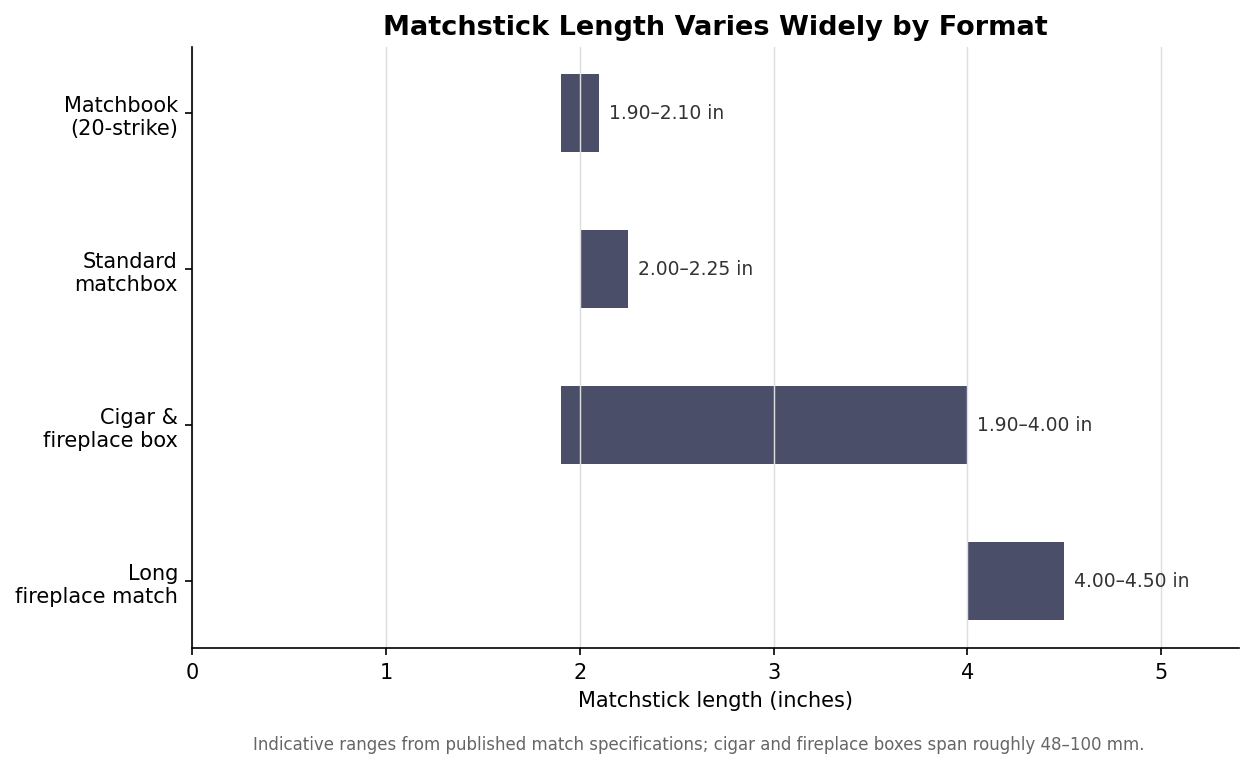
The fix is to name the actual task before you pick a format. A cigar lounge lighting long-filler cigars wants a four-inch cigar match with a generous head; a cocktail bar lighting tea lights is fine with a two-inch box; a candle brand tucking a match into a gift set should match the stick to the depth of its vessels. Choose the length for the flame you need to reach, then choose the box around it, not the other way round.
Guessing the count and the minimum
Match counts are not standardized across formats, and assuming they are leads to either shortages or a garage full of boxes. A 20-strike matchbook holds twenty matches in two rows of ten; a small matchbox tends to hold around thirty; a standard box holds roughly forty; and cigar or fireplace boxes vary widely, often somewhere between ten and forty sticks depending on how long the matches are, since longer sticks simply take more room.
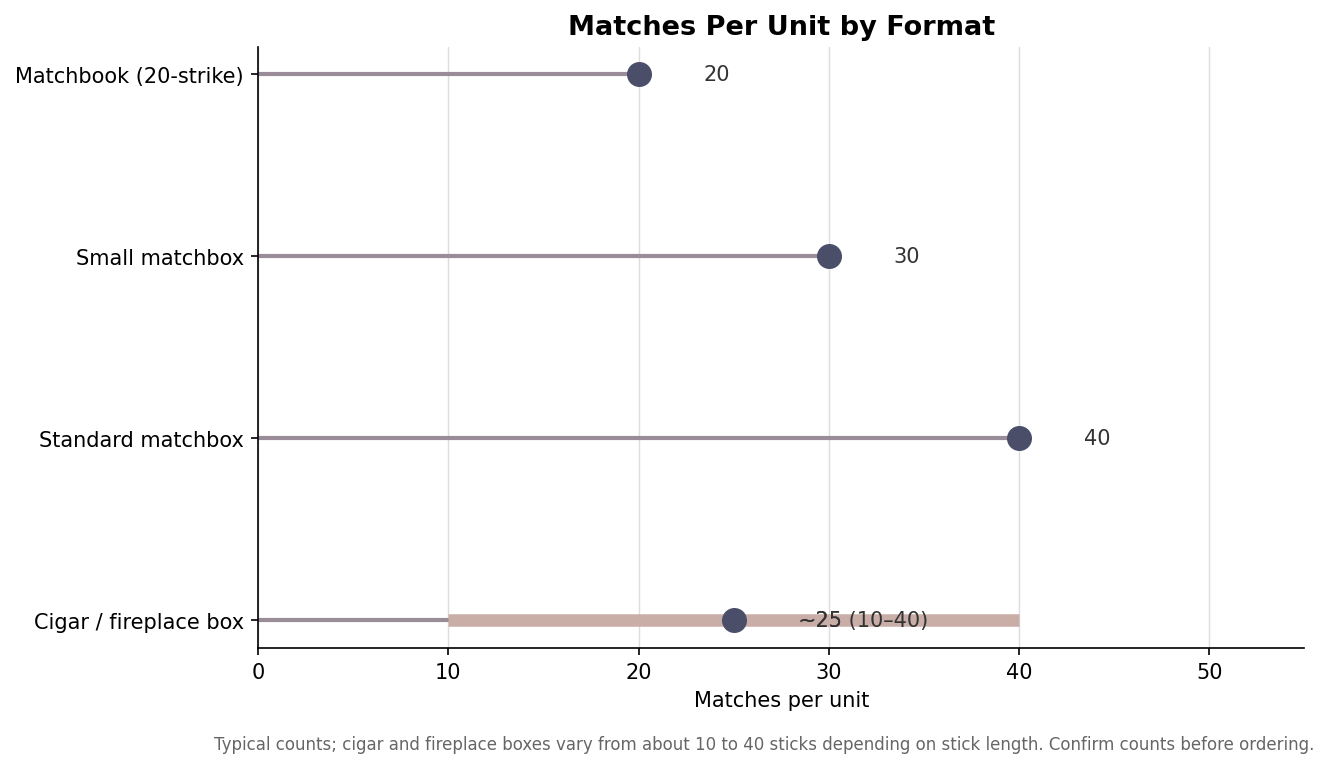
Minimums vary just as much by format. Printed matchbooks and simple matchboxes are often available at relatively low minimums, which makes them friendly for a one-off event. Imported cigar and specialty boxes commonly carry much higher minimums, sometimes on the order of a thousand boxes, because they are produced on a different scale. Work out your true need first: how many people, how many uses each, and how many you want left as keepsakes. Then check the minimum for the format you want before you fall in love with it, so the quantity math and the box style agree from the start.
Designing as if the striker were not there
A match is one of the few printed products with a working part on its surface, and that part eats into your canvas. The striker has to stay a striker. On a matchbox the striker runs down one or both sides; on a matchbook it sits on the cover, traditionally on the back. Artwork that runs across the strike surface either gets omitted there or interferes with a clean strike, so the usable print area is smaller than the box looks. Plan the design around the striker’s location rather than discovering it in the proof.
There is a safety wrinkle here too. Ordinary safety matches only ignite against their own treated striker, which is a feature, not a flaw, but it means the striker is not decorative and cannot be buried under a flood of ink. Decide early which surfaces carry your brand and which one stays functional.
Art that dies at match scale
A logo that sings on a poster can disappear on a box the size of a stick of gum. Fine hairlines fill in, small text turns to mud, and a dark logo on a dark box vanishes. Contrast and simplicity win at this size. Favor a bold, simplified version of your mark, keep text large enough to read at arm’s length, and give the design real contrast against the box color rather than a tone-on-tone effect that photographs beautifully and reads as a smudge in the hand.
Color method matters as well. A printed wrap gives you full-color flexibility, while foil stamping delivers a metallic shine but in a single foil color with less fine detail. Neither is better in the abstract; the question is whether your brand lives or dies on a gradient, in which case print, or on a clean metallic monogram, in which case foil earns its keep. Ask to see how your specific art looks at true size before you commit.
Forgetting matches are a made-to-order, flammable good
The last mistake is treating matches like a flat print job on a two-day turnaround. They are manufactured to your design and they are a flammable product, which stretches the timeline at both ends. Production alone can run on the order of a week to ten days before anything ships, and specialty imported boxes take longer. Because matches are flammable, transit is handled with more care than a stack of business cards, which adds time rather than saving it.
Give a match order a comfortable runway. Firm up your quantity, approve a proof shown at actual size, and order well ahead of the event or launch rather than the week before. Handle the five decisions above in order, format to length to count to design to timeline, and the little box that seemed too simple to think about arrives right the first time, striker working, logo legible, and long enough to light whatever you meant it to light.
Leave a Reply